
Most people think stress only exists in the mind.
They imagine stress as racing thoughts, constant worrying, or feeling emotionally overwhelmed after a long day. But stress has a way of moving deeper than that. When it is carried for long periods of time, it slowly settles into the body too.
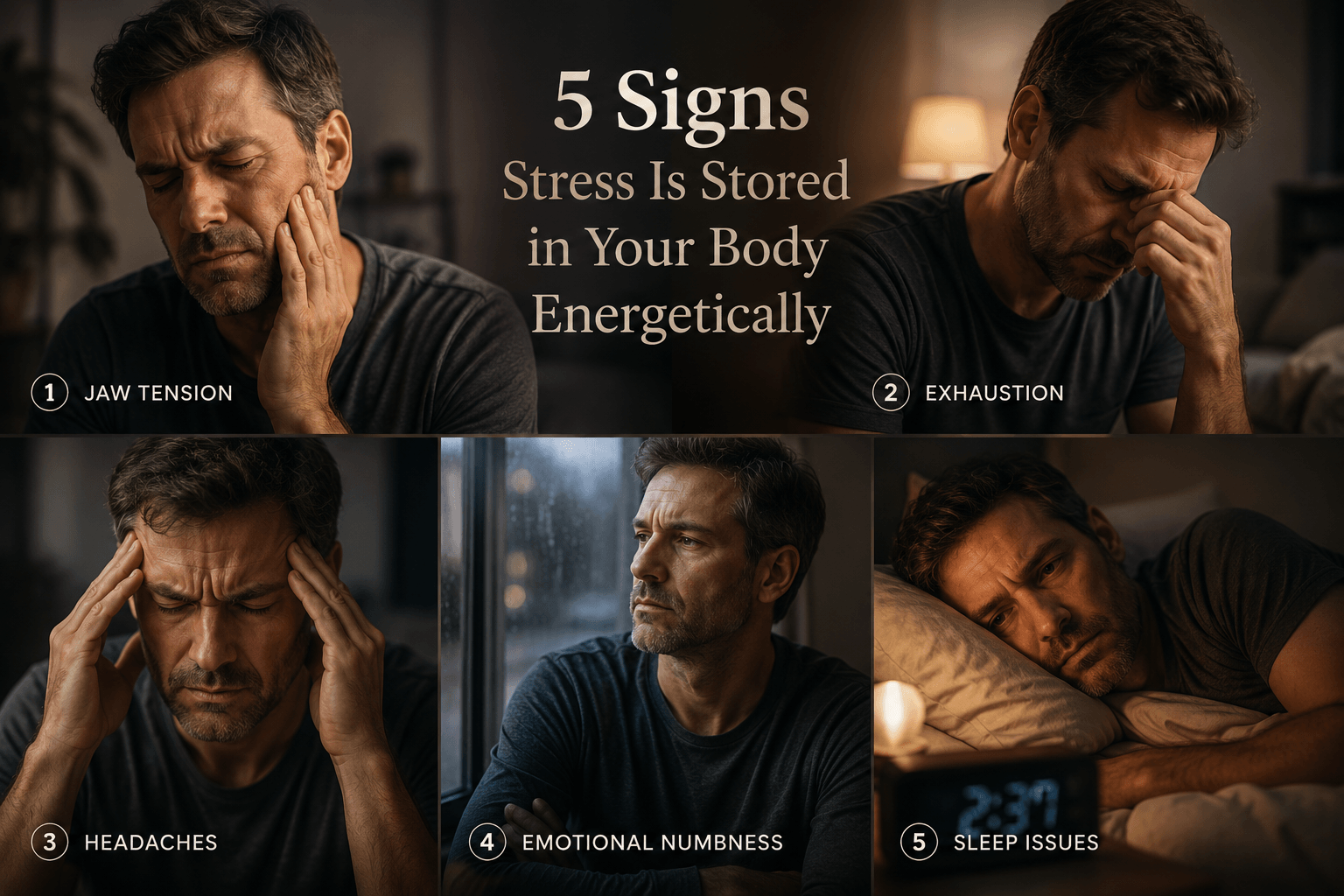
At first, the signs can feel small and easy to ignore. Maybe your jaw stays tight throughout the day without you realizing it. Maybe you wake up exhausted even after getting a full night of sleep. Some people notice frequent headaches, while others begin feeling emotionally disconnected from themselves and the people around them.
Over time, these experiences become so normal that many people stop questioning them altogether.
The body adapts to stress for survival, but it was never designed to stay in that state forever.
When the nervous system is constantly overwhelmed, the body begins storing tension physically, emotionally, and energetically. Even after stressful situations pass, the body may continue holding onto the effects long afterward. This is one reason many individuals feel stuck in a cycle of exhaustion, tension, mental fog, and emotional heaviness without fully understanding why.
The body is always communicating. The challenge is that most people have simply learned to stop listening.
One of the most common places stress hides is in the jaw. Many people clench their teeth while working, driving, sleeping, or even during ordinary conversations without noticing it. The body tightens automatically as though it is constantly preparing for pressure or conflict. Over time, this tension spreads into the neck, shoulders, and head, creating an ongoing feeling of tightness that never fully goes away.
Energetically, jaw tension is often connected to suppressed emotions, internal pressure, and the feeling of constantly holding things in. The body braces itself because the nervous system no longer feels fully safe enough to relax.
Exhaustion is another sign that stress may already be deeply stored within the body’s energy. This kind of exhaustion feels different from normal tiredness. It is the kind of fatigue that sleep does not fully fix. People often describe feeling emotionally drained, mentally foggy, and physically heavy no matter how much rest they try to get.
When stress becomes chronic, the nervous system spends too much time in survival mode. The body continues using energy as though it is responding to danger, even during quiet moments. Eventually, this constant state of alertness leaves people feeling depleted on every level.
Headaches and pressure throughout the head and neck are also incredibly common. Many individuals carry mental overload for so long that the mind never truly slows down. Thoughts continue racing late into the night. Worry becomes constant background noise. The nervous system stays overstimulated, and the body begins responding physically.
Sometimes the headache is not simply physical tension. Sometimes it is the body asking for stillness.
Stress also has a way of affecting emotions in quieter ways that are often overlooked. Some people do not become emotional when overwhelmed. Instead, they become numb. They stop feeling excited, connected, or fully present in their own lives. It can feel like moving through each day on autopilot while emotionally disconnected from yourself and others around you.
This emotional shutdown is often a protective response from the nervous system after carrying too much stress for too long. When the body becomes overwhelmed, it sometimes responds by dulling emotional sensitivity altogether just to keep functioning.
Sleep problems are another major sign that stress is deeply affecting the nervous system and energetic body. Many people feel exhausted all day but suddenly cannot relax once they finally lie down at night. The mind keeps moving. The body remains tense. Even during sleep, the nervous system struggles to fully settle.
This is what happens when the body no longer remembers how to feel safe enough to rest deeply.
This is one reason more people are turning toward Reiki for stress reduction and energetic healing. Reiki creates a space where the nervous system can finally slow down. During a session, the body is gently guided into a calmer state through relaxation, energetic balance, and stillness.
Many people notice their breathing soften during Reiki. Their shoulders begin releasing tension. Their minds become quieter. Some individuals even become emotional without fully understanding why because the body is finally letting go of stress it has been carrying for far too long.
Reiki does not force the body to heal. It simply creates the conditions where healing can begin naturally.
For some people, that experience feels deeply emotional. For others, it feels like finally being able to exhale after holding tension for years. The experience is different for everyone because stress lives differently in every body.
What remains consistent is the sense of calm many people feel when their nervous system finally receives permission to rest.
At Trust in Divine Timing, Reiki sessions are designed to support stress reduction, emotional balance, nervous system relaxation, and energetic healing in a peaceful and welcoming environment. You can explore all available services at https://trustindivinetiming.com/services/.
Weekday and weekend sessions are available by appointment, making it easy to receive support when you need it most. If you feel ready to release what your body has been carrying and reconnect with a deeper sense of calm, you can schedule an appointment by filling out the form at https://trustindivinetiming.com/schedule-appointment/. You can also call or text anytime to schedule an appointment.
Sometimes healing begins when the body finally realizes it no longer has to hold everything alone.